The Science of Human Fatigue
Biological + Cognitive + Operational + Technological
Cognitive and physical fatigue
- Cognitive fatigue is influenced by sleep loss, circadian timing, sustained mental activity, and biological modifiers such as caffeine and light exposure.
- Physical fatigue reflects muscular exertion, metabolic demands, and recovery following physical work or exercise.
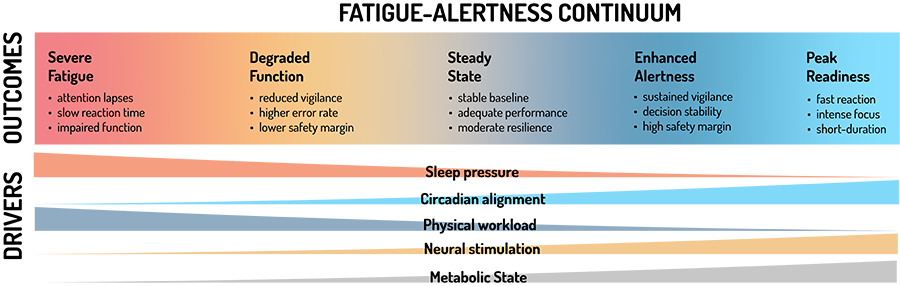
Fatigue and Alertness: A Continuous Human Performance Spectrum
Fatigue and alertness are not opposites but dynamic states that fluctuate throughout the day.
They are shaped by:
- sleep quantity and quality
- circadian timing
- physical and mental workload
- stress and health
- environmental conditions
These factors influence vigilance, reaction time, decision-making, and overall readiness.
Scientific foundations
Applications across society
- healthcare and patient safety
- aviation and transportation
- industrial and shift-work environments
- military operations
- education and knowledge work
- sports, and physical performance
- emerging human-technology systems
Technology and the future
New technologies are changing how fatigue is monitored and managed. Wearable sensors, biometrics, and predictive analytics are enabling real-time insight into human readiness and performance.
These advances are shaping applications in healthcare, workplace safety, transportation, and human-machine collaboration.
Research and operational ecosystem
Scientific and operational applications of fatigue research are implemented globally across healthcare, transportation, and industrial sectors by organizations including CIRCADIAN®, https://circadian.com/, and other leaders in sleep, circadian, and human performance science.
Fatigue is not simply a symptom or a workplace concern —
it is a universal human state central to health, safety, and performance in a 24-hour world.
For research collaborations or strategic applications related to fatigue and alertness science: inquiries@fatigue.com